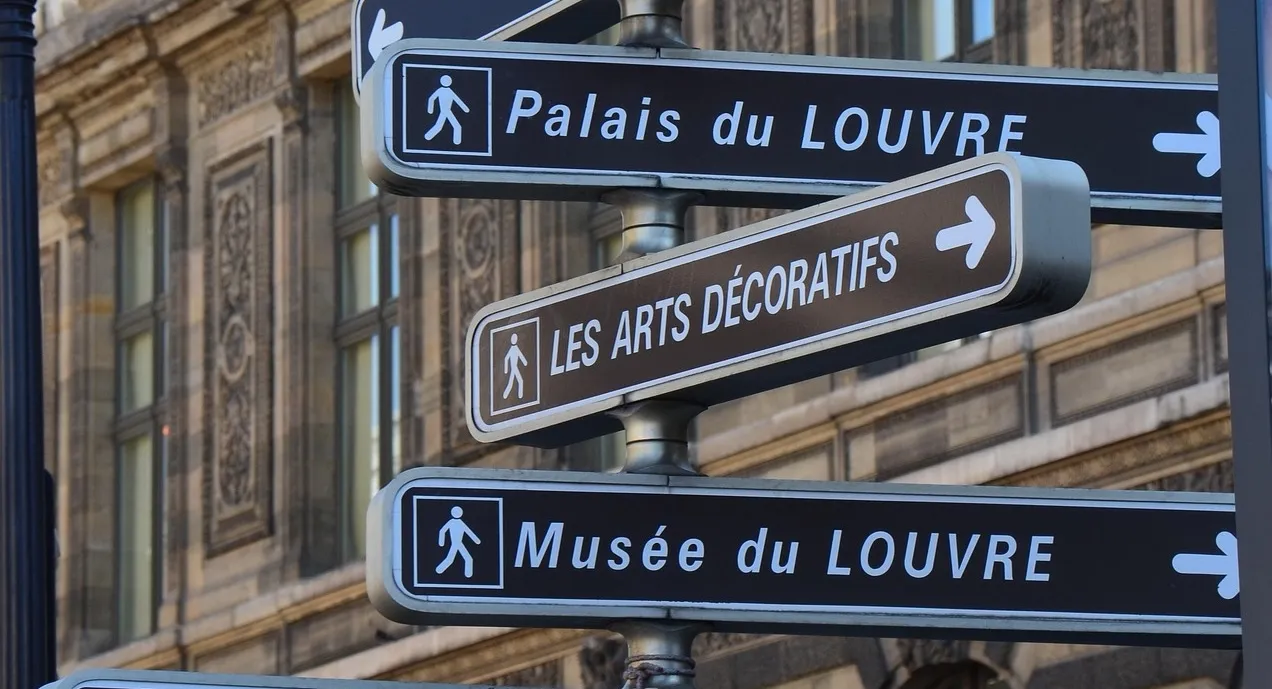
You could spend a whole visit moving between the Louvre’s most familiar faces. But some of its best stories are in the places between them: a fortress wall below the palace, a stone ship above a staircase, a gilded room that took centuries to finish.
These are the 12 stops in WalkTeller’s Louvre audio tour, in their walking order. Each highlight gives you something to look for, the story behind it, and its room number. Start with the medieval Louvre in Sully, cross into Denon for sculpture and paintings, then finish in Richelieu’s Napoleon III Apartments.
Before you go: Book museum admission via the official website.
1. Medieval Louvre foundations and moat
Sully wing · Level -1 · Rooms 133–135
Before you meet the Louvre’s paintings, meet the building that came before them. Beneath the palace are the stone walls of the fortress begun by Philippe Auguste around 1190. It guarded the western edge of Paris, with a moat outside and a great round keep within. This was a defensive stronghold long before it was a royal residence or a museum.
The remains came back into view during the Grand Louvre excavations in the late twentieth century. Look for the weight of the masonry and the curve of the old tower foundations. Starting here changes the rest of the visit: the galleries upstairs become the latest chapter in a building that has been remade again and again.
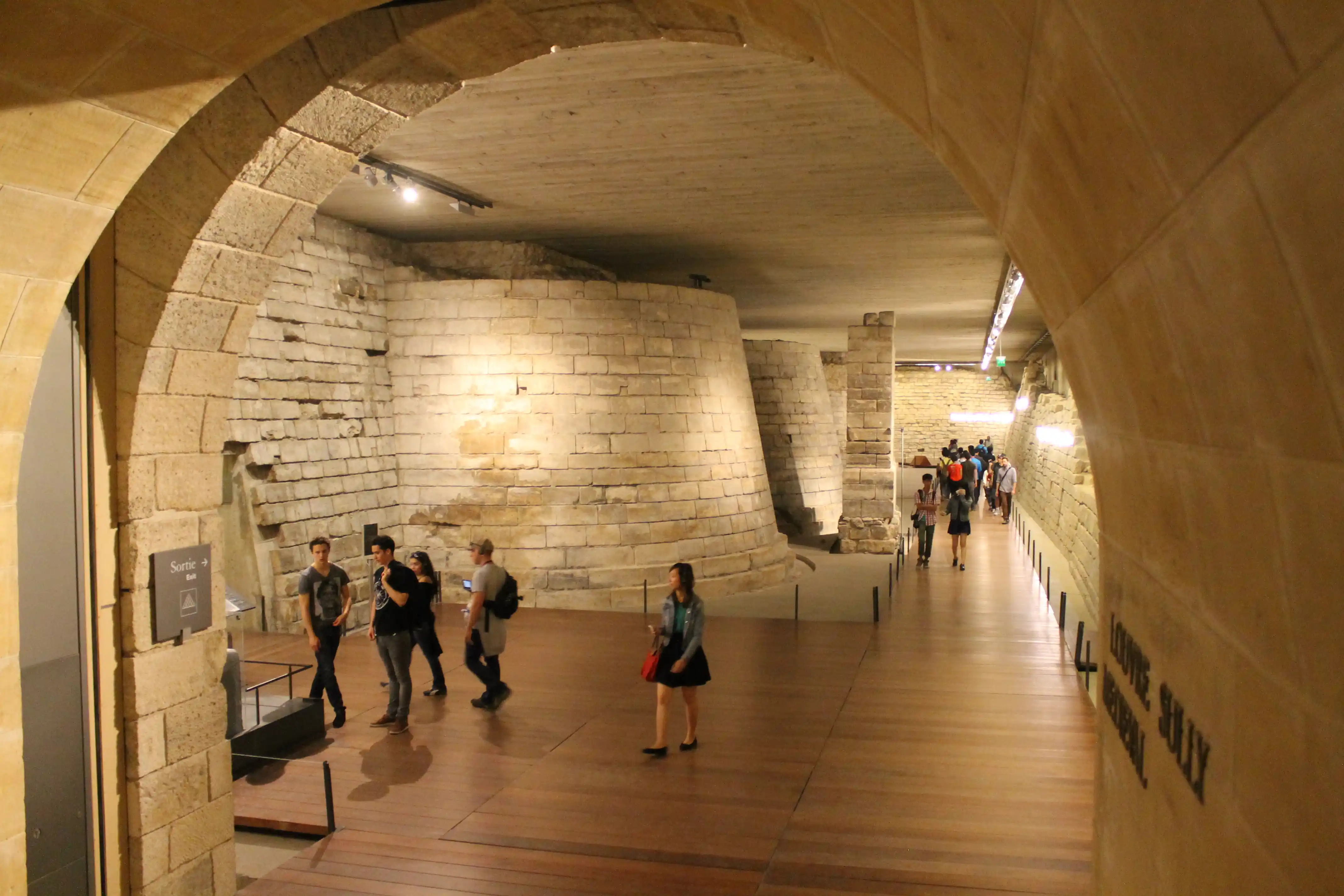
The Moat Beneath the Palace
Medieval Louvre foundations and moat · English
2. Great Sphinx of Tanis
Sully wing · Level -1 · Room 338
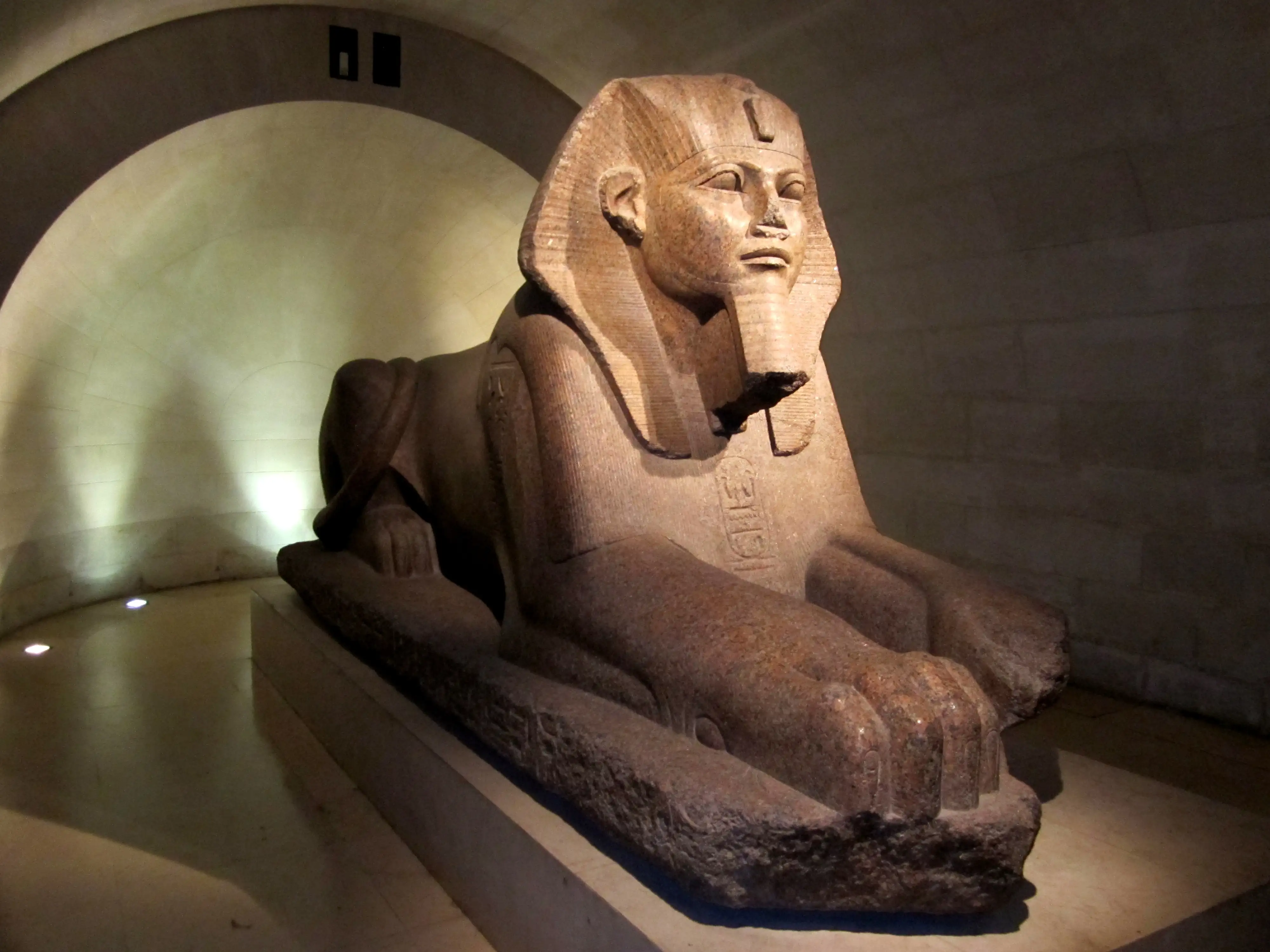
A lion’s body, a king’s face and a gaze that seems entirely untroubled by visitors: the Great Sphinx of Tanis makes an imposing guardian. Found at the temple of Amun in Tanis, Egypt, the granite sculpture carries inscriptions from several rulers. Later kings added their names to a monument that was already old, borrowing its authority for themselves.
Look at the long front paws and the royal headdress before searching for the inscriptions. The fascination is not just the statue’s scale, but the way a single object could serve different reigns. You will find it in the crypt on level −1, so resist the temptation to go straight upstairs to the Egyptian galleries.
3. Venus de Milo
Sully wing · Level 0 · Room 345
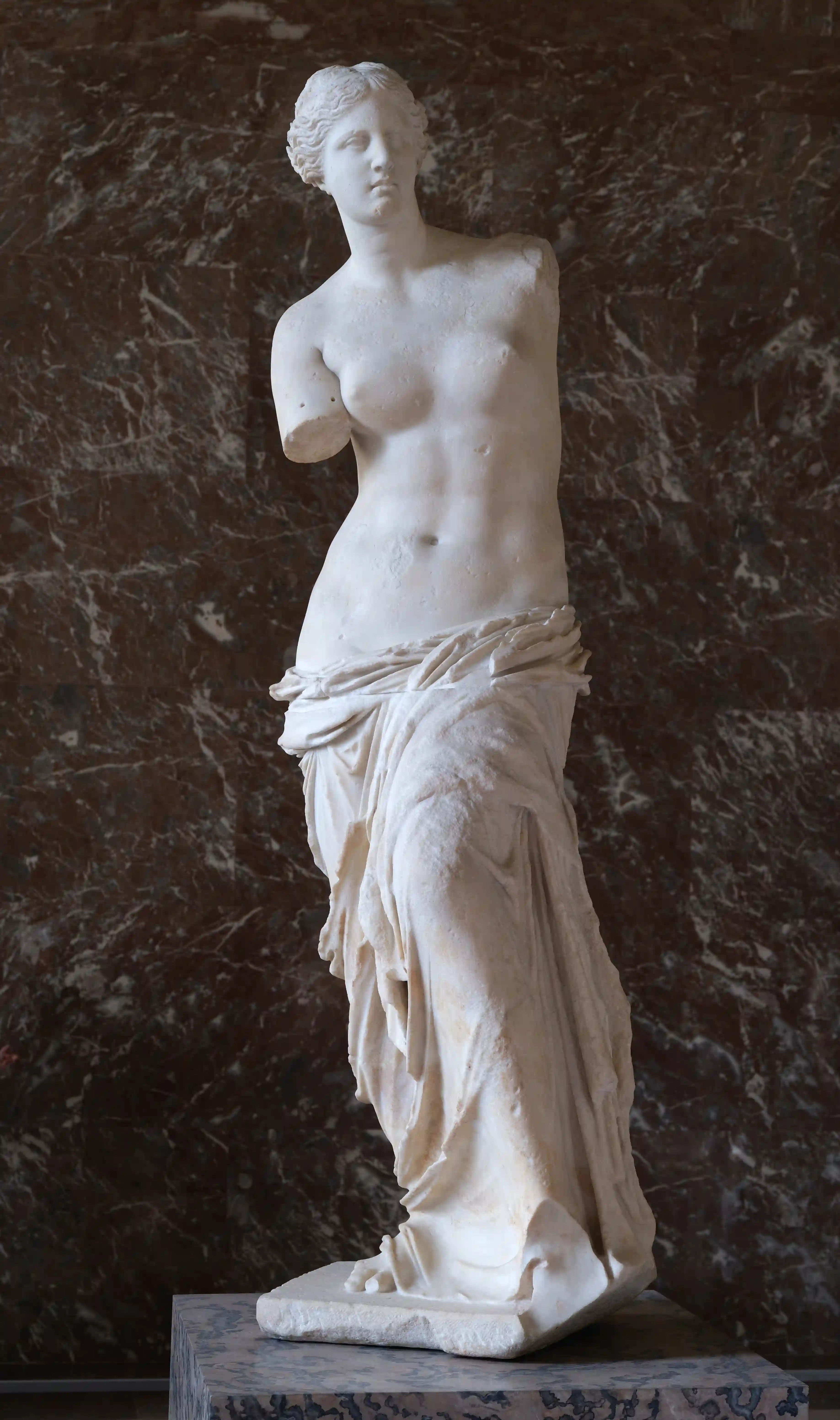
The missing arms are the first thing most people notice. They are also what keeps the Venus de Milo open to interpretation. Found on the island of Melos in 1820, the statue is usually identified as Aphrodite, the Greek goddess of love. Without the objects she once held, though, her original pose and precise identity are harder to establish.
A hand holding an apple was found nearby, but its connection to the statue is uncertain. Rather than imagine replacement arms, notice what survives: the twist of the torso, the shift of weight and the drapery gathered around her hips. Those details give the figure its movement even without the gestures that once completed it.
The Arms Nobody Put Back
Venus de Milo · English
4. Dying Slave
Denon wing · Level 0 · Room 403
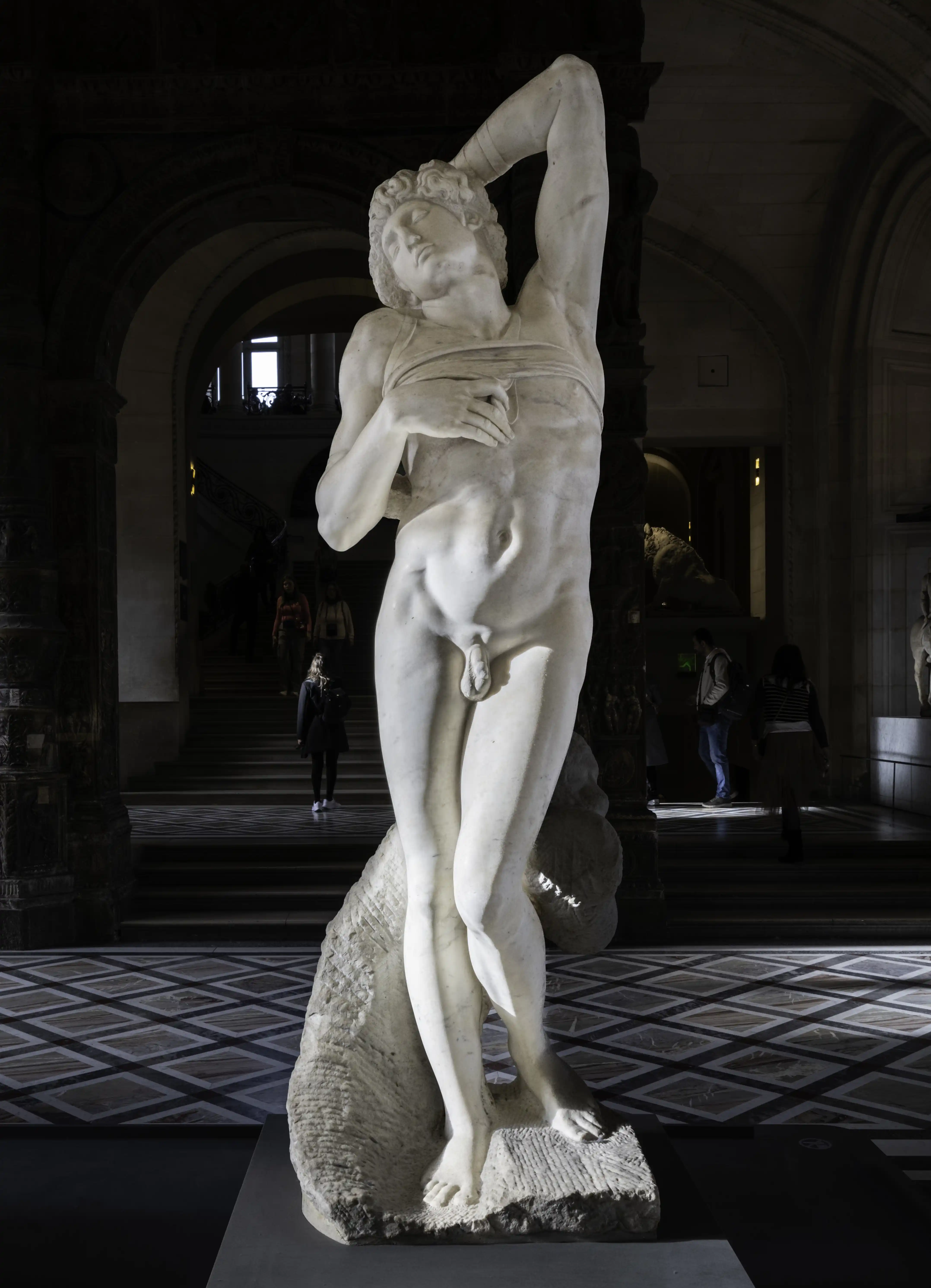
Michelangelo made the Dying Slave for the tomb of Pope Julius II, but the monument’s changing plans left this figure and the nearby Rebellious Slave without their intended setting. They eventually reached France and, after the Revolution, the Louvre. Their journey is a reminder that a masterpiece’s museum home is often far removed from its original purpose.
Compare the two bodies if access allows. The Dying Slave’s head falls back beneath a raised arm, while the other figure seems to struggle against restraint. The title suggests death, yet the face can look closer to sleep. The contrast makes this a rewarding place to pause before moving from sculpture to the painted crowds upstairs.
5. Liberty Leading the People
Denon wing · Level 1 · Room 700
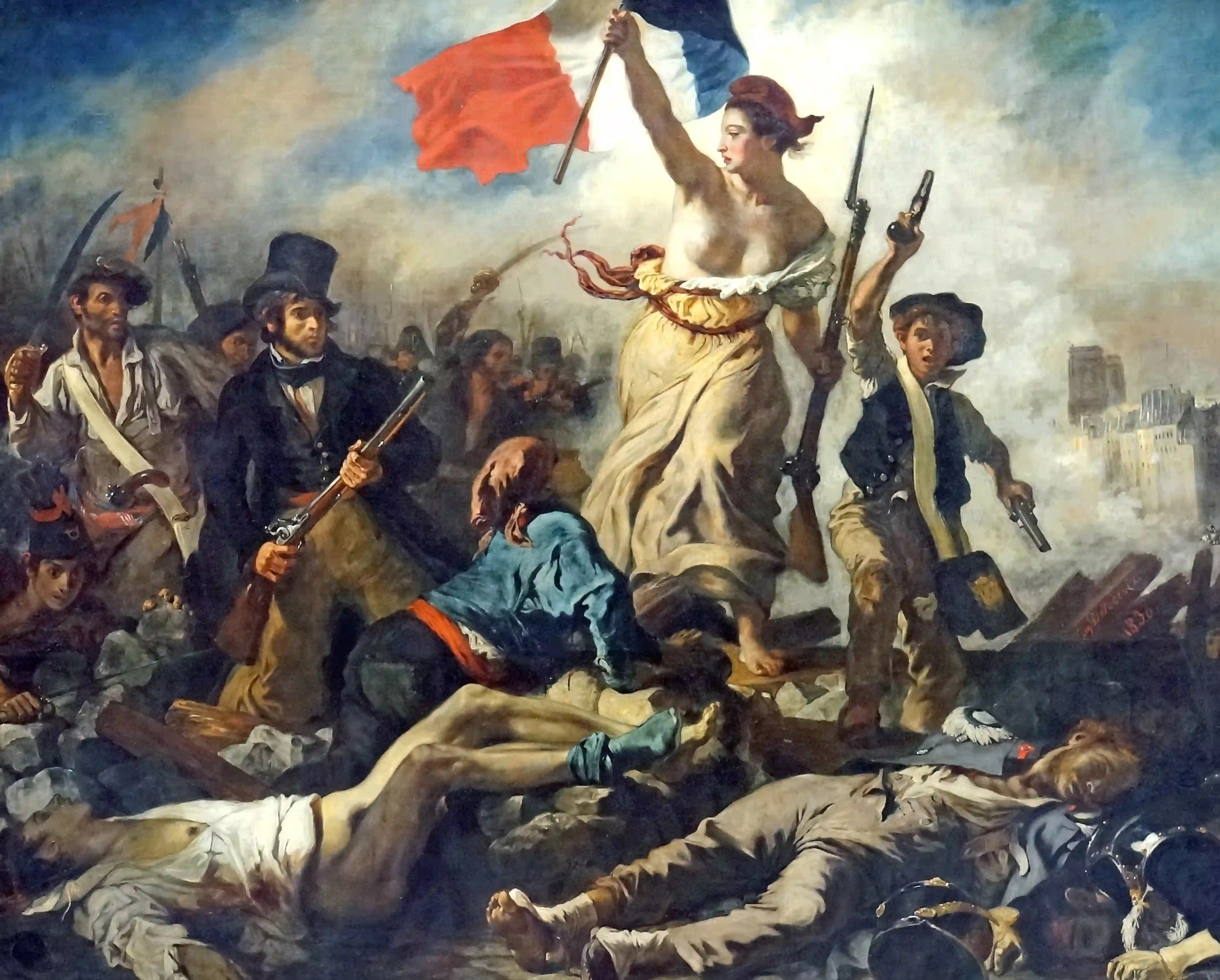
Delacroix’s flag-bearing figure is an image of Liberty rather than a portrait of one particular fighter. She advances across a barricade with a Phrygian cap, a gun and the French tricolour. Around her, people in different clothes bring different parts of Paris into the same surge of movement.
The event is the July Revolution of 1830, not the Revolution of 1789. Look beyond the famous flag to the fallen bodies, the boy with pistols and the distant towers of Notre-Dame. Blue, white and red recur lower down in the painting, linking the banner to the people beneath it. Its familiar image becomes much less simple when you look at the street under Liberty’s feet.
6. The Raft of the Medusa
Denon wing · Level 1 · Room 700
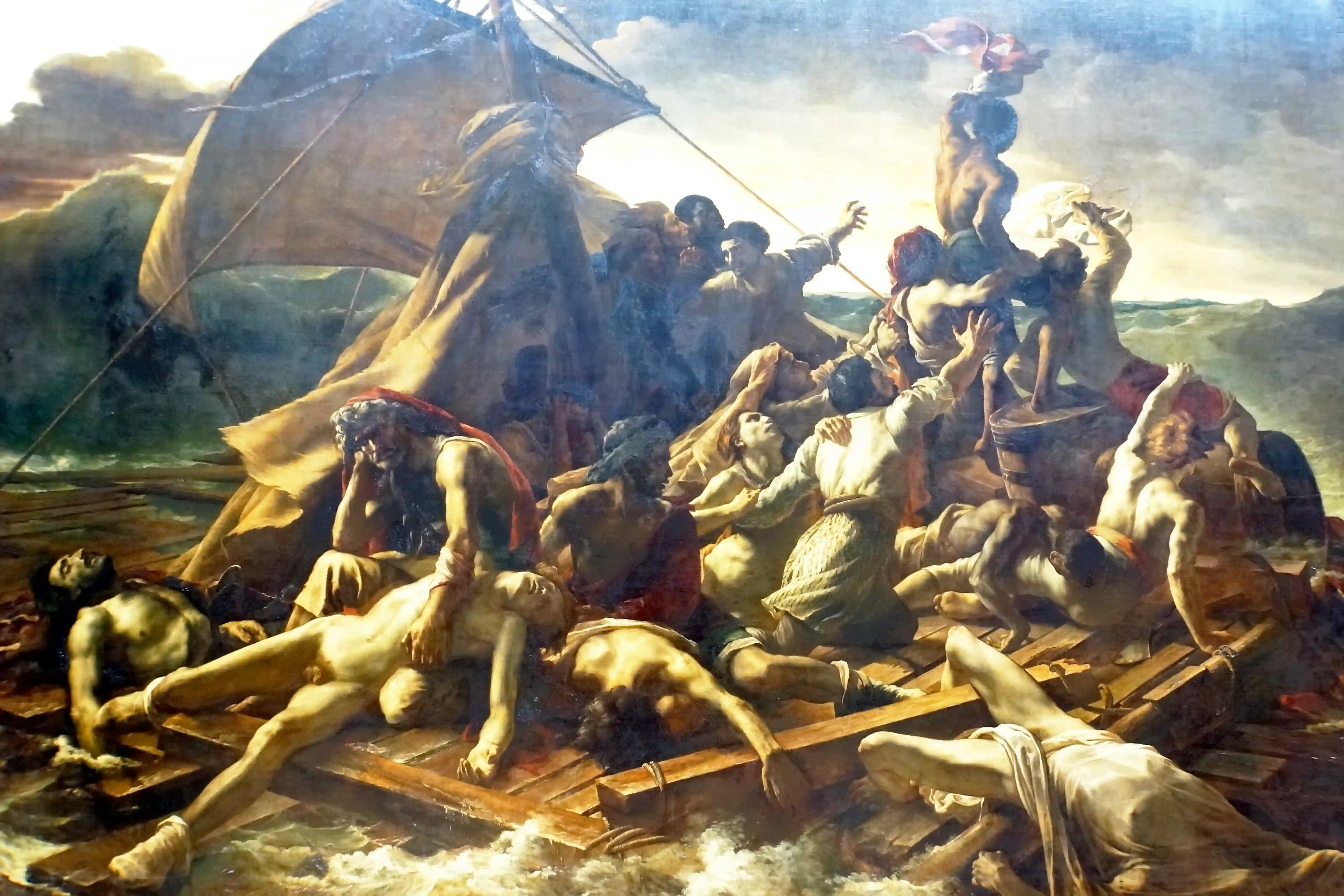
Géricault turns a tiny shape on the horizon into the most important thing in an enormous painting. The people on the raft are signalling toward a distant rescue ship. Some reach upward; others lie still in the foreground. Your eye climbs with them from exhaustion toward the possibility of help.
The subject was a real disaster: the French frigate Méduse ran aground off West Africa in 1816, leaving roughly 150 people on a makeshift raft. Only fifteen were rescued. Géricault spoke with survivors and studied the wreck’s story before painting it. Once you have taken in the scale, find that small ship again. The painting holds its figures in the terrible uncertainty before rescue.
7. Mona Lisa
Denon wing · Level 1 · Room 711
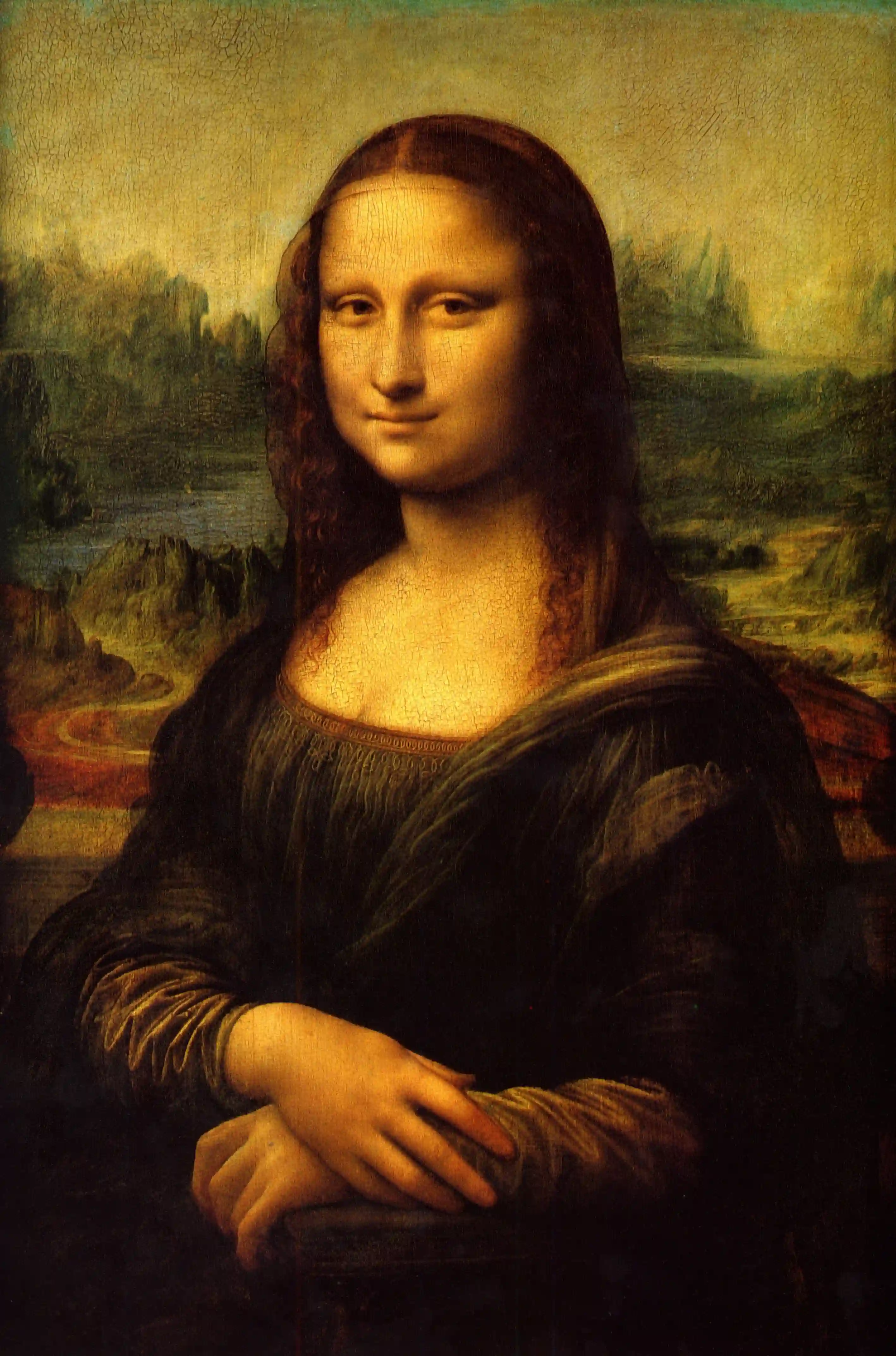
Leonardo’s portrait of Lisa Gherardini is smaller than its reputation suggests. Behind the crowd and protective glass, a seated woman faces you against a landscape of winding paths and distant water. The softened edges of her face show Leonardo’s sfumato: transitions so subtle that the expression seems to change as your eyes move.
Its fame also has a story outside the frame. In 1911, former museum worker Vincenzo Peruggia stole the painting, and the empty space became a spectacle of its own. Newspapers carried the face far beyond the Louvre before the portrait was recovered in Italy more than two years later. Give yourself a moment to look at the painting itself, then remember the immense banquet on the opposite wall.
8. The Wedding Feast at Cana
Denon wing · Level 1 · Room 711
Turn from the Mona Lisa and the room changes scale. Veronese’s Wedding Feast at Cana fills an enormous canvas with guests, servants, musicians and architecture. At the centre sits Jesus, almost quiet enough to miss. The miracle of water becoming wine is folded into the ordinary work of serving a feast.
The painting was made for a monastery dining hall in Venice. Veronese gave the biblical wedding the costumes and grandeur of a Venetian celebration, with musicians in the foreground and columns behind the crowd. Follow the vessels and the servants as well as the most brightly dressed guests. It is a useful antidote to looking at just one famous face: here, the whole pleasure is letting your attention wander.
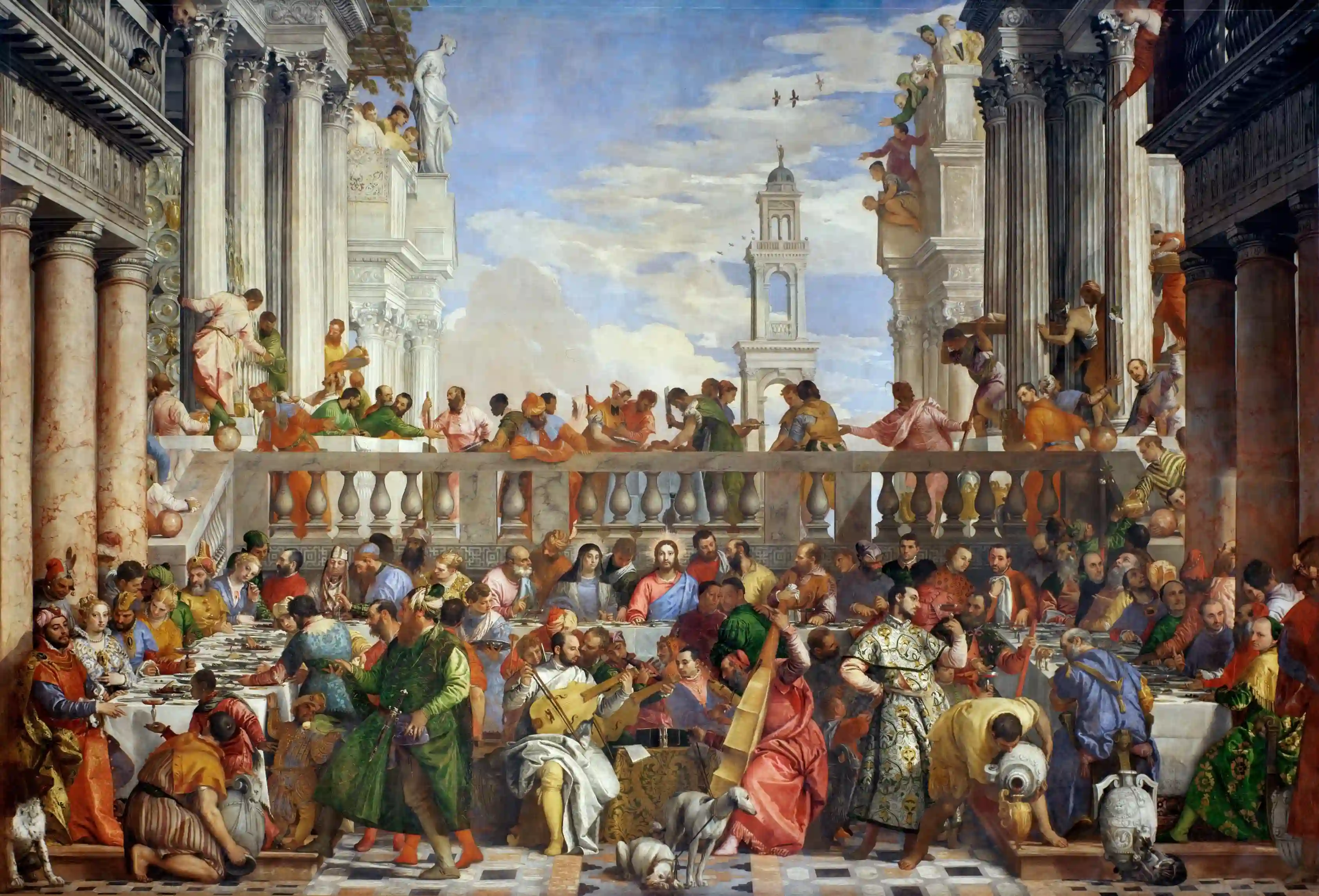
The Quiet Guest at the Largest Table
The Wedding Feast at Cana · English
9. The Coronation of Napoleon
Denon wing · Level 1 · Room 702
The title leads you to expect Napoleon crowning himself. Jacques-Louis David instead shows him holding a crown above the kneeling Joséphine. The pope is nearby, but the emperor commands the central gesture. Notre-Dame has become a carefully arranged stage for imperial power.
Now look toward the spectators’ gallery. Napoleon’s mother, Letizia Bonaparte, appears with an excellent view, although she was not at the ceremony. Napoleon commissioned the painting, and David’s version makes room for the people and appearances the emperor wanted remembered. The work is both a picture of an event and a lesson in how an official image can rewrite it.
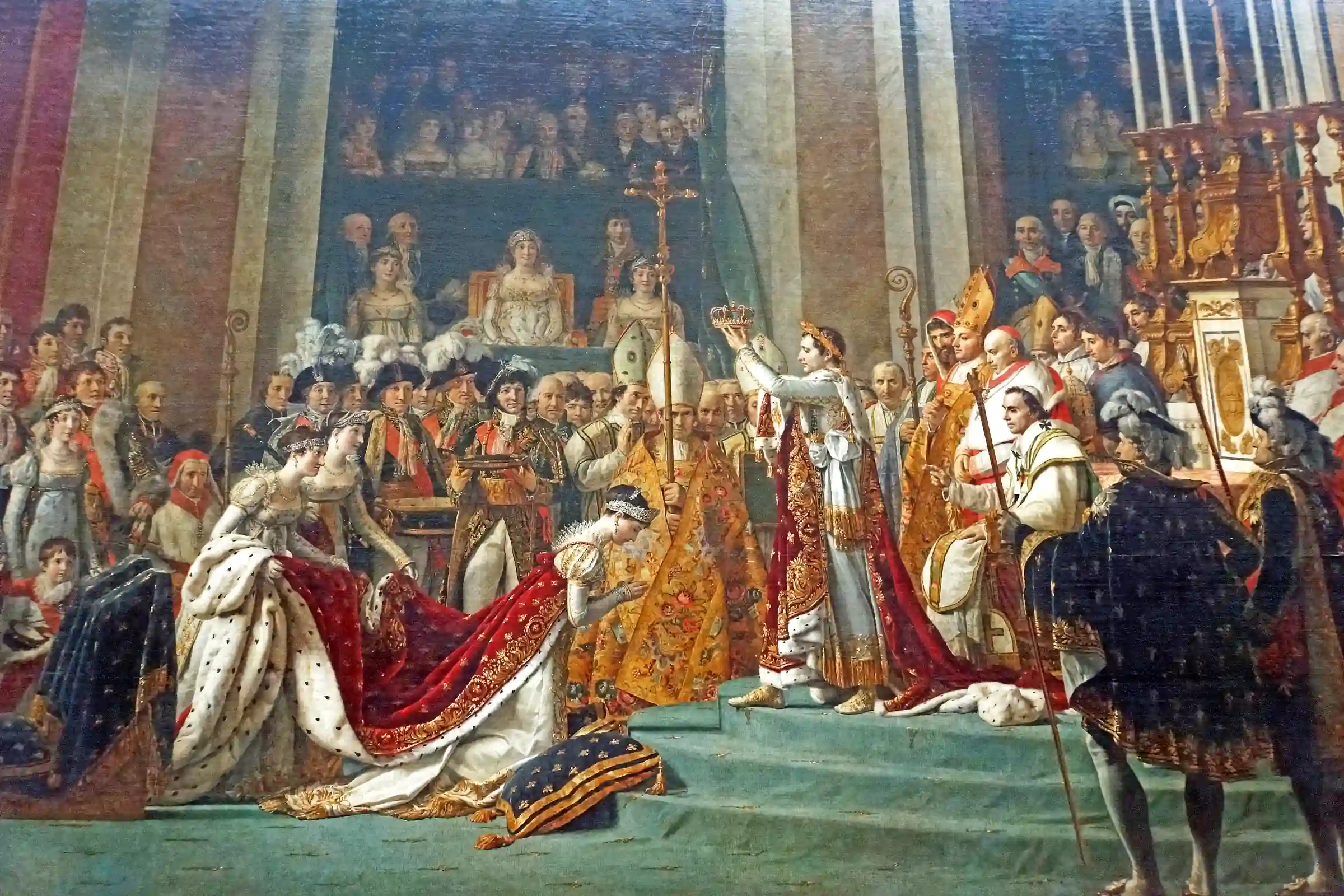
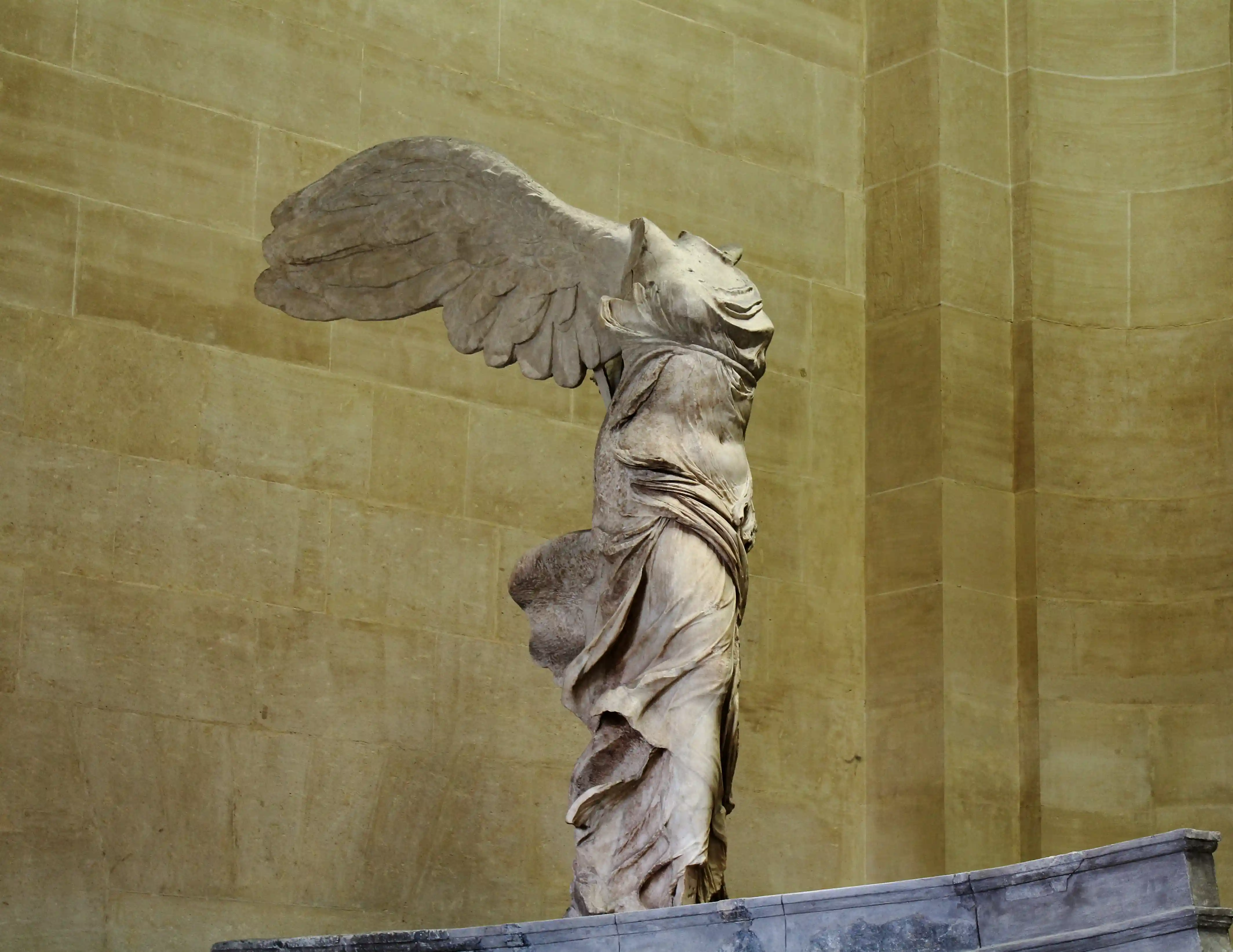
10. Winged Victory of Samothrace
Denon wing · Level 1 · Room 703
At the Daru Staircase, Winged Victory stands on the prow of a stone ship. The goddess Nike was found in fragments on Samothrace in 1863; the monument’s familiar silhouette emerged as the figure, wings and ship base were understood and brought together. Her head and arms remain missing.
Look at how the pale marble cloth presses against the body, then gathers in heavy folds below. It gives the sculpture the feeling of wind and spray without either being present. The grey ship underneath matters just as much: it turns a winged figure into a maritime offering, while the Louvre’s staircase gives her a new approach, rising above the visitors below.
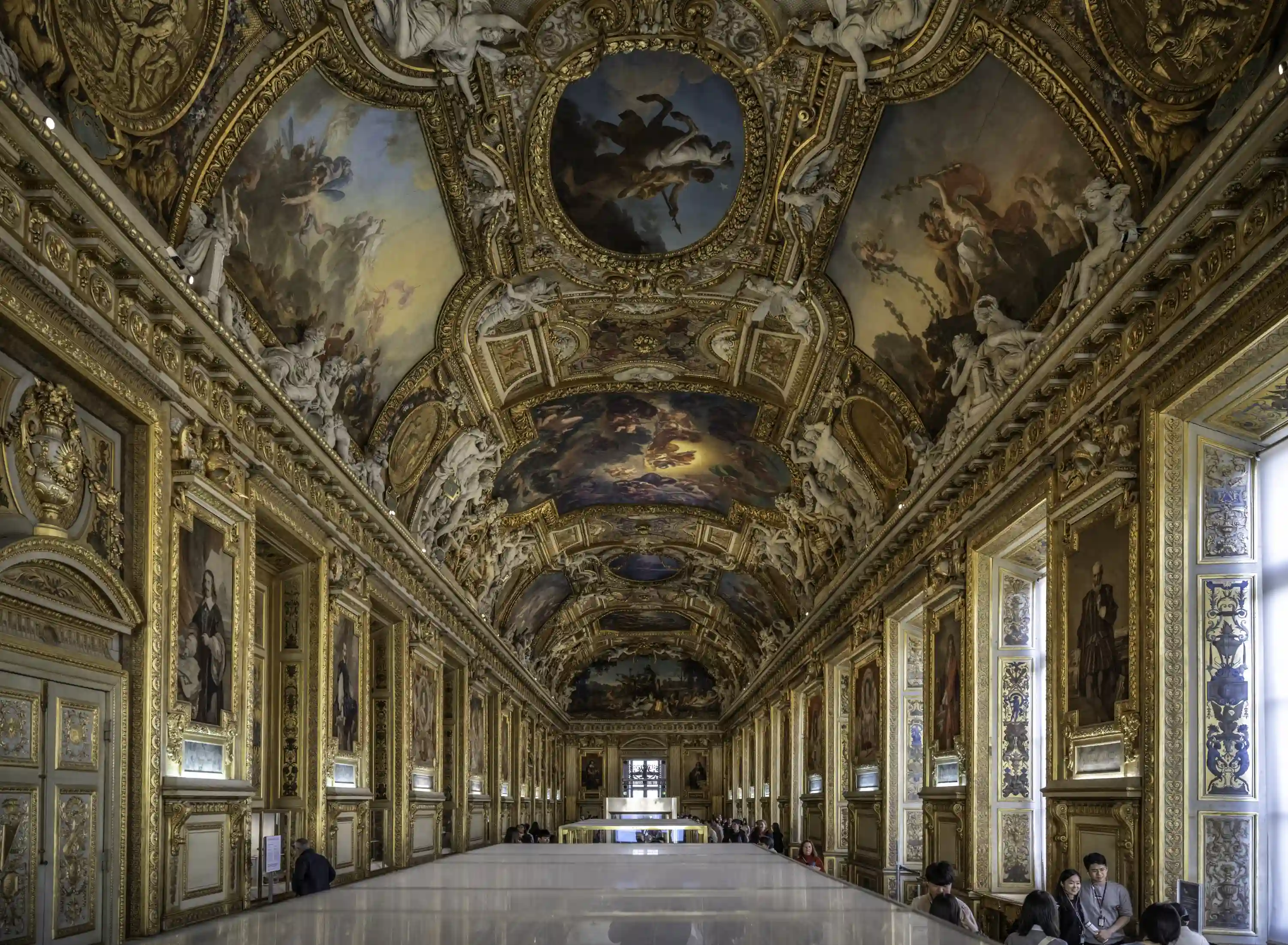
11. Galerie d’Apollon
Denon wing · Level 1 · Room 705
The Galerie d’Apollon is a work of art you walk inside. After a fire in 1661, Louis XIV’s rebuilding project used Apollo, the sun god, to express royal power. Charles Le Brun planned a painted and gilded world of hours, seasons and heavenly order around that theme.
Its apparent unity hides a much longer making. Work paused when the court moved to Versailles, and later artists completed parts of the scheme. Delacroix’s central ceiling shows Apollo defeating the serpent Python. Look up along the length of the vault rather than expecting a single artist or a single moment. The architecture and decoration are the reason to stop here; individual displays can change.
12. Napoleon III Apartments
Richelieu wing · Level 1 · Rooms 543–546
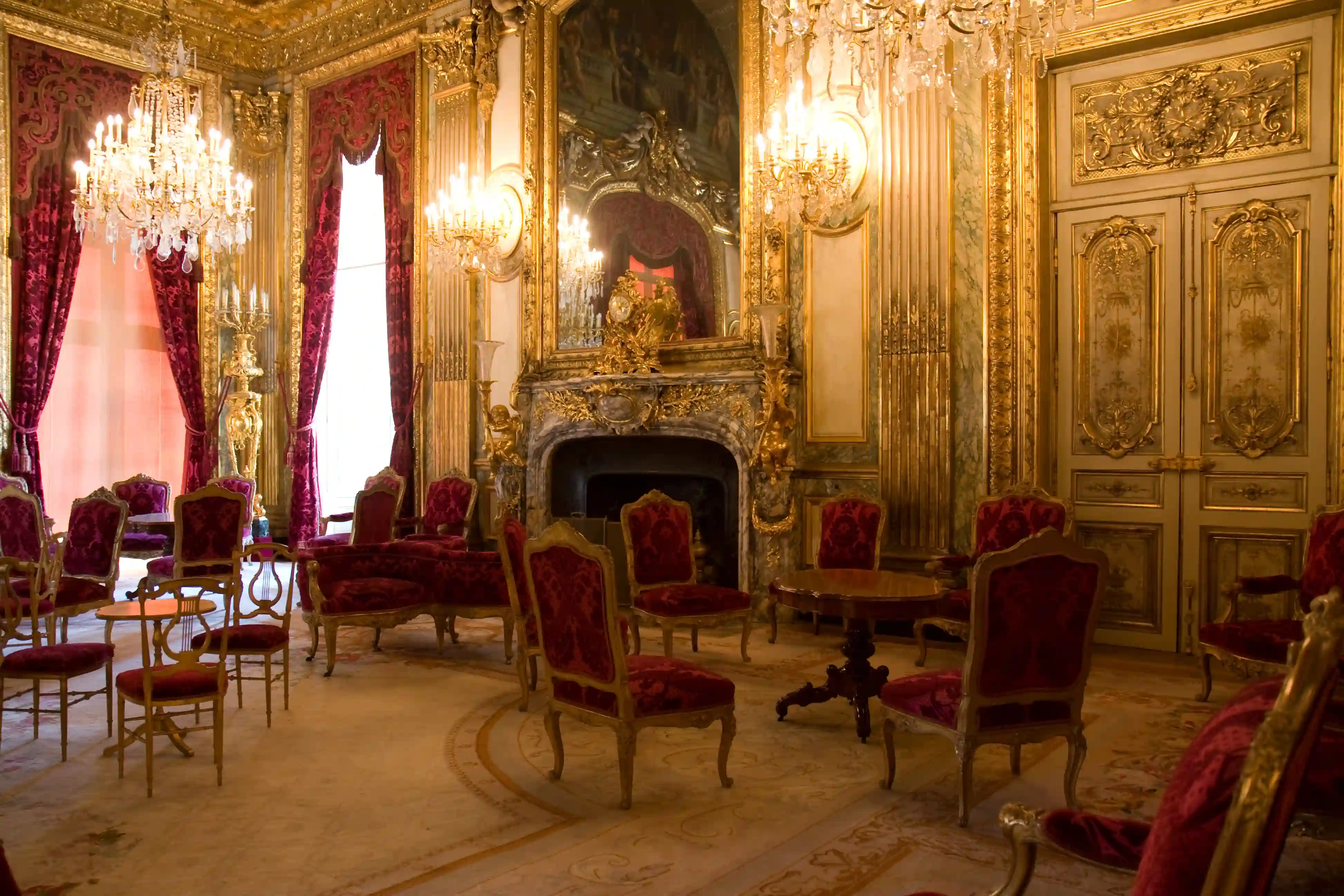
Red velvet, gilding, chandeliers and a salon ready for an evening’s performance make an emphatic finale. Despite the name, Napoleon III did not live in these apartments. The rooms were made for his Minister of State in the Richelieu wing; the emperor and Empress Eugénie could visit as guests from their home at the Tuileries.
Look for the raised place for musicians above the Grand Salon and the furniture designed for conversation. These were rooms for receiving and impressing people, not simply for private comfort. The Ministry of Finance occupied this part of the Louvre until 1989. Today, the setting itself tells the story, with walls and ceilings taking the place of the framed works you have been following through Denon.
Sources
Medieval Louvre foundations and moat ↗ · Great Sphinx of Tanis ↗ · Venus de Milo ↗ · Dying Slave ↗ · Liberty Leading the People ↗ · The Raft of the Medusa ↗ · Mona Lisa ↗ · The Wedding Feast at Cana ↗ · The Coronation of Napoleon ↗ · Winged Victory of Samothrace ↗ · Galerie d’Apollon ↗ · Napoleon III Apartments ↗
Hear all 12 Louvre stories
Follow the full self-guided tour with audio at every stop and an interactive map at your own pace.
Open tour in browser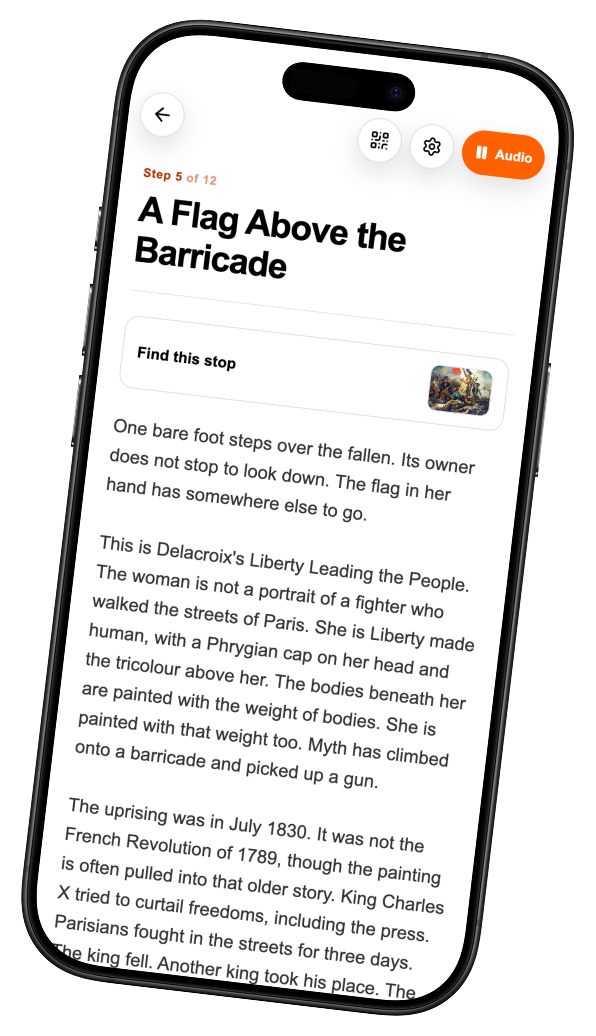
Explore the Louvre route
Follow the same map used in our Louvre guide. Use Back and Next to preview all 12 stops, with a separate go-upstairs step before each floor change. Drag to look around.
Go upstairs to level -1
Level -2 · Next stop: Medieval Louvre foundations and moat
Start under the Pyramid on level −2. Follow Sully signs through admission control to the stairs. Continue when you are upstairs on level −1.
Before your Louvre visit
Does the free guide include admission?
No. WalkTeller’s map and 12 audio stories are free, with optional tips. Museum admission is separate. Arrange your admission through the Louvre’s official ticket service and check your entrance and time slot.
Which entrance and where do I start?
The route is planned from the Pyramid entrance in Cour Napoléon, 75001 Paris. After security, begin in the reception hall under the Pyramid, level −2. Follow Sully signs through admission control, then go up to the Medieval Louvre on level −1. If your ticket or staff directs you to another entrance, ask for the Medieval Louvre; do not look for the foundations outside.
How long does the Louvre tour take?
Allocate 4 hours or more, including must-do 12 stops and roughly 35–45 minutes of audio. You want to add time for viewing other artworks, queues, breaks and security. These are planning estimates; crowds, closures and your pace can extend the visit.
What if the Mona Lisa queue is long?
Decide how much time you want to spend waiting. You can skip stops 7 and 8 and continue toward the Coronation in room 702. Cana is in the same room as the Mona Lisa, so do not assume it has a separate queue-free entrance. Follow staff instructions and the signed visitor flow.
What if a room is closed?
Skip the unavailable stop and find the next reachable room using the current museum map and staff advice. Do not cross a barrier or follow this route through a closed gallery. You may still want to read and listen to the story away from the artwork.
Do I need to download anything?
The tour opens in your phone browser; no app download is required. Make sure you have internet to load the tour, maps, images and audio. Bring headphones and a charged phone. Audio is available in English, French and Spanish.
Is this a step-free route?
These directions include floor changes and the Daru Staircase. Ask the Louvre’s visitor assistance team for an accessible route and current lift access before setting off.