LOUVRE · COMPARE BEFORE YOU GO
Which is the best audio guide to the Louvre?
Guided tours sold out? Choose WalkTeller for a mapped 12-stop route. Check how it compares against the official Louvre audio guide or Rick Steves highlights.
Swipe the table to compare all three guides →
| What matters |  WalkTeller |  Louvre Official |  Rick Steves |
|---|---|---|---|
| Free audio guide | Yes | No | Yes |
| Works on your phone | Yes | No | Yes |
| Interactive route map¹ | Yes | No | No |
| Separate audio clips | Yes | Yes | No |
| Transcript included | Yes | No | No |
| Flexible pacing | Yes | Yes | No |
| Audio languages | 3 languages | 9 languages | Only English |
| Start listening | Try WalkTeller free | Rental information ↗ | Get the audio ↗ |
¹ WalkTeller maps the route between stops. Rick Steves provides a static tour map. The Louvre’s published information does not confirm route-navigation features.
Choose what fits your visit
WalkTeller
Worried about skipping a masterpiece?
WalkTeller’s free 12-stop route pairs individual stories with an interactive map. Designed to take you across the Louvre and make sure you see the most interesting things.
Louvre Official
Is the official guide worth €6?
Choose it for breadth: 150+ artworks and 200+ room/history commentaries by Louvre curators. Reserve online, collect the device under the Pyramid; bring ID for the deposit.
Rick Steves
Is Rick Steves good for a first visit?
A free English highlights overview for casual visitors. Download before arrival for offline listening; preview the museum map and check in-app script updates before following the recording.
Sources & limits
- Official Louvre: coverage, languages and collection; price and ID deposit. Current pages do not name the device model or confirm transcripts, offline listening or route navigation.
- Rick Steves: Louvre recording and MP3 format; app scripts, updates, offline audio and maps; Louvre tour map; device support. Scripts are in the app; the MP3 has no chapter breaks. The app requires iOS 15+ or Android 14+.
- WalkTeller: current tour configuration, 12-stop route, three audio languages and the recording below. View tour details.
- Visitor discussion: Reddit: which Louvre audio guide? Personal experiences about finding your way, highlights coverage and preparing ahead.
Comparison based on published information and WalkTeller’s current configuration.
Hear WalkTeller before you choose
One of 12 stories · English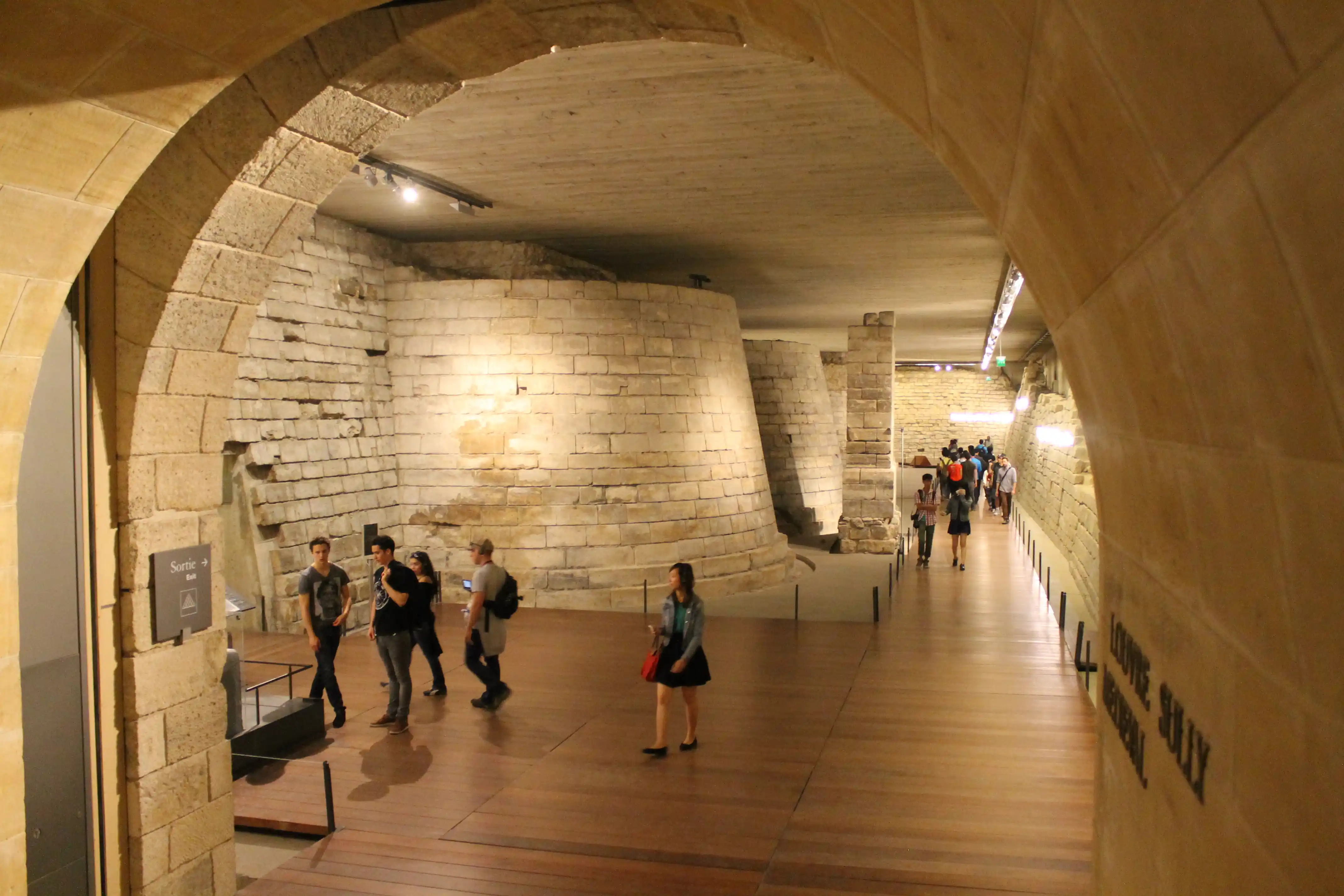
The Moat Beneath the Palace
Medieval Louvre foundations and moat
Transcript
These stones used to face a moat. There was no glass pyramid above them. There was no museum. This was the edge of a fortress.
King Philippe Auguste began building the first Louvre around 1190, on the western approach to Paris. The threat came from beyond the city. A walled castle could guard a vulnerable side and store weapons. It was not first planned as a comfortable home for a king. Inside its rectangular walls stood a huge round keep called the Grosse Tour, the Big Tower. Around the outside ran the moat. The buried masonry in this room belongs to that earlier building, not to a gallery invented to look medieval.
The castle did not keep the same job for long. As Paris grew, new defenses carried the city's edge farther west. The fortress found itself inside the city it had once protected from outside. Royal rooms took over a place that had been built for soldiers and stores. Later kings wanted light, ceremony and space. François I had the old keep pulled down in the sixteenth century. The Renaissance palace rose where the defensive stone had stood. Its walls hid what had been here before.
The buried part waited through still more changes. The palace became a museum. New wings surrounded old courtyards. In the late twentieth century, the Grand Louvre project brought excavations into the heart of the building. The old foundations came into view again. Here the museum did not need to acquire an object from another country or another century. Its own earlier body was underfoot.
Look at the weight of the masonry. A moat is usually imagined as water or an empty trench. What survives here is the wall it defended. It makes the word 'Louvre' feel different. Upstairs, it can mean paintings, crowds and long corridors. Down here, it once meant a barrier on the edge of a city. The same site changed from weapon store to royal residence to public museum without ever quite letting go of its first shape.
There is a temptation to call these ruins the start of the museum. The people who set the stones would not have recognized that future. They were making a place that could resist an attack. The building later became useful for almost the opposite purpose: opening its rooms to strangers. A public walk through the old moat is possible because its first job is long over.
The moat is no longer outside the Louvre. It is a room inside it.
All 12 WalkTeller stops, in walking order
- Medieval Louvre Foundations and Moat
- Great Sphinx of Tanis
- Venus de Milo
- Dying Slave
- Liberty Leading the People
- The Raft of the Medusa
- Mona Lisa
- The Wedding Feast at Cana
- The Coronation of Napoleon
- Winged Victory of Samothrace
- Galerie d’Apollon
- Napoleon III Apartments
A small route through a big museum
The 12 highlights that you should not miss.